


search
date/time

Sun, 1:00AM
broken clouds
7.1°C
NW 5mph
broken clouds
7.1°C
NW 5mph
 | Sunrise | 6:39AM |
| Sunset | 5:04PM |  |

Andrew Palmer
Group Editor
P.ublished 17th October 2026
arts
Review
Classical Music: Marcel Dupré
Dupré’s Passion, from Advent to Easter
Symphonie Passion, Op 23, Deux Esquisses, Op 41
Quatre Motets, Op 9, Variations sur un Noël, Op 20
Richard Cook Organ
St Edmundsbury Cathedral Choir Claudia Grinnell Director
Regent REGCD604
https://www.regent-records.co.uk/
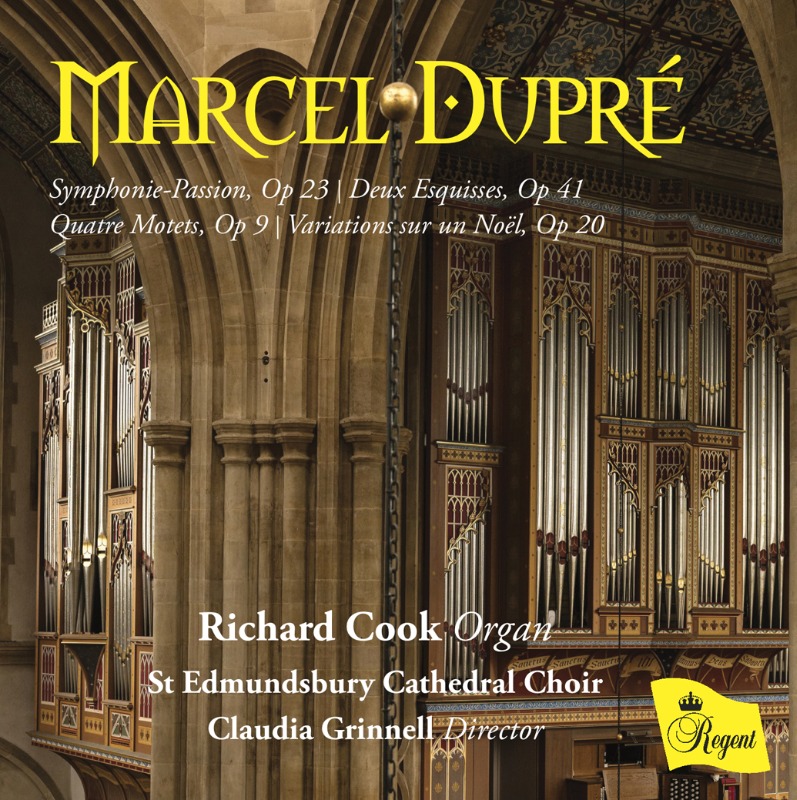
At the heart of the disc is Marcel Dupré’s Symphonie-Passion, Op 23, a towering achievement in the organ literature of the last century, flanked by two further showpieces, the Variations sur un Noël, Op 20 and the Deux Esquisses, Op 41. There is a second debut here too. Claudia Grinnell took the helm of the cathedral’s music in 2024, and this marks her recording bow with St Edmundsbury Cathedral Choir, whose role is to sing Dupré’s Quatre Motets, Op 9, along with the ancient chants from which the symphony grows.
Faith ran deep in Dupré (1886–1971), and the feasts and seasons of the Catholic calendar shaped his imagination. The running order honours that, so the disc unfolds like a liturgical year in miniature: it opens in the waiting stillness of Advent, brightens at Christmas, darkens through Lent and Holy Week, and ends in Easter rejoicing. Rather than presenting the symphony in one sweep, its four movements are separated, with the motets placed in between, and each movement is preceded by its plainchant source: Jesu redemptor omnium, Adeste fideles, Stabat mater dolorosa and Adoro te devote. It is a device that pays dividends, allowing the listener to hear each chant before Dupré transforms it and to appreciate the whole all the more.
The opening movement has a real sense of urgency. Cook clearly knows his way around this instrument, building the energy with lovely reeds before easing into a sublime quiet passage. The Nativity is deliciously registered, while the dialogue between pedals and manuals in the Crucifixion is told with great eloquence, the hushed ending conveying the message with quiet conviction. His handling of the swell box is masterful throughout.
Then comes the Resurrection. Cook’s nimble, clean fingerwork makes the most fearsome passages sound effortless, and he builds tension superbly, with a genuine thrill of excitement. There are strong contrasts of dynamics, and he conjures an ambience that seems to seep through the speakers. The crescendo of the finale is wonderfully paced, and we hear the organ in all its kaleidoscopic colour, with meaty pedal textures, well-judged use of the solo divisions and a full organ that sounds convincingly French. The climaxes are thrilling.
The Variations sur un Noël give Cook the chance to display the full palette at his disposal, and the close is particularly satisfying, a brief toccata in which the pedal department truly delivers. The Deux Esquisses, excellently registered, are welcome additions to the programme.
Dupré’s four motets are seldom performed, which makes their inclusion all the more valuable. Composed during the First World War and dedicated to Philippe Bellenot, they are sung well by the choir under Grinnell, who capture each of their contrasting moods. The balance between accompanist and choir is good throughout, and the set ends with Laudate Dominum, which also brings the disc to a close in a blaze of organ sound, the singers nicely balanced against it.
Accomplished, virtuosic and full of the spirit of Dupré, this is a debut that sounds anything but. If this is where Richard Cook begins, one can only wonder where he will go next.
Also by Andrew Palmer...
Classical Music: Encores for Mr ScottsClassical Music: Vaughan Williams A Sea SymphonyClassical Music: Schmitt: Orchestral WorksNorthern Talent Tracker: This Week's AppointmentsEconomy Edges Forward As Business Groups Press Chancellor For Budget ReliefThe shortened address for this article is: newspub.uk/321bn