


search
date/time

Sun, 1:00AM
broken clouds
13.4°C
WSW 6mph
broken clouds
13.4°C
WSW 6mph
 | Sunrise | 4:15AM |
| Sunset | 8:10PM |  |

Andrew Palmer
Group Editor
P.ublished 1st August 2026
arts
Review
Crossover Albums: Revival: The New Album by Reductio
Holy Rave: How One Organist Turned Downside Abbey into a Crypt-Side Disco
Tracklist: Suite Gothique; Fugue in D Minor; Veni Veni Emmanuel; Ave Verum Corpus Natum; Toccata in B Minor; Adagio in G Minor; Kyrie Eleison; Bacchanale; Ave Verum (Byrd) Moonlight Jazz; Symphonie
The new electronic dance music album by Reductio, featuring the Compton Organ at Downside Abbey and the Allen Historique Organ
For more information to and to order click here
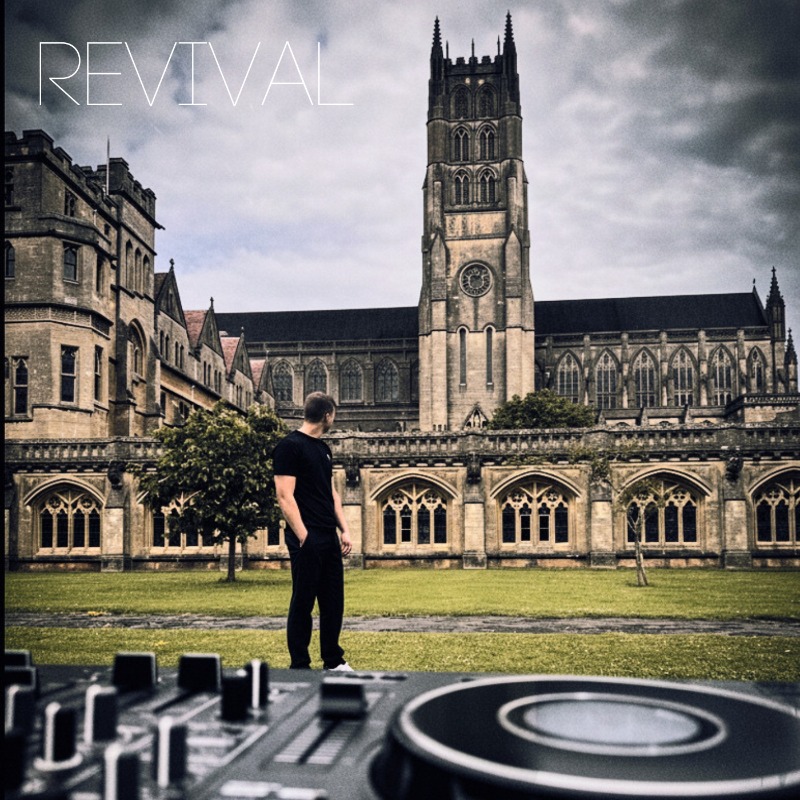
A quick word before I begin: this is not my usual straightforward critique. Readers who know my reviews will be used to something rather more measured — but stick with me, because by the end, you'll see exactly why this record demanded a different kind of writing.
Let me say this plainly, for the broadsheet traditionalists clutching their pearls and the red-top readers scrolling past: prepare yourself for something different, if you dare. Take the nation's most revered organ repertoire, run it through an electronic wringer somewhere between a Hammer horror film and a Monty Python fever dream, and you get an album that is, in the truest sense, ridiculous – and gloriously, defiantly good.
The sound of the crypt gone electric
Recorded in the stone-cold hush of Downside Abbey in Stratton-on-the-Fosse, deep in the Somerset countryside, on the Abbey's mighty Compton organ, Dionysian takes some of the best-known repertoire in the canon — Albinoni's Adagio, the thunderous fugue from Bach's Toccata and Fugue in D minor — and infuses it with electronic wizardry: chiming bells, a relentless disco pulse, and the human voice reworked as electrofunk. It is high-energy, high-intensity, and—I'll admit it—utterly infectious.
This is not the first time a magnificent church organ has been plugged into an amplifier for something loud; the mighty pipe organ has powered heavy metal concerts before now. But this performance is something else entirely. Where metal borrows the organ's menace, Walters borrows its soul and hands it back transformed.
Walters was a Cambridge classicist as much as a musician—he read Classics at Cambridge alongside an organ scholarship, began DJing around the city while simultaneously conducting the Charter Choir of Homerton College, and it is that improbable double life that gives Dionysian its intellectual spine as well as its dancefloor pulse. As the project's own notes put it:
"With his hand firmly in the worlds of both classical and electronic music, Dionysian is the creation of artist Reductio. Combining the concepts of Greek mythology and Nietzsche's philosophy, the Dionysian brand establishes a musical platform 'of many forms'."
The name is not decoration. In Greek myth, Dionysus straddled the mortal and the divine, God of wine, ecstasy, and riot; for Nietzsche, he embodied—in the project's words—"the eternal enigmas of duality and paradox". Walters takes that duality seriously:
"Dionysian's vision is to propel musical creation forward in both the contemporary and classical realm, creating a platform that champions both these worlds of music... Dionysian is not just a name, it is a way of life."
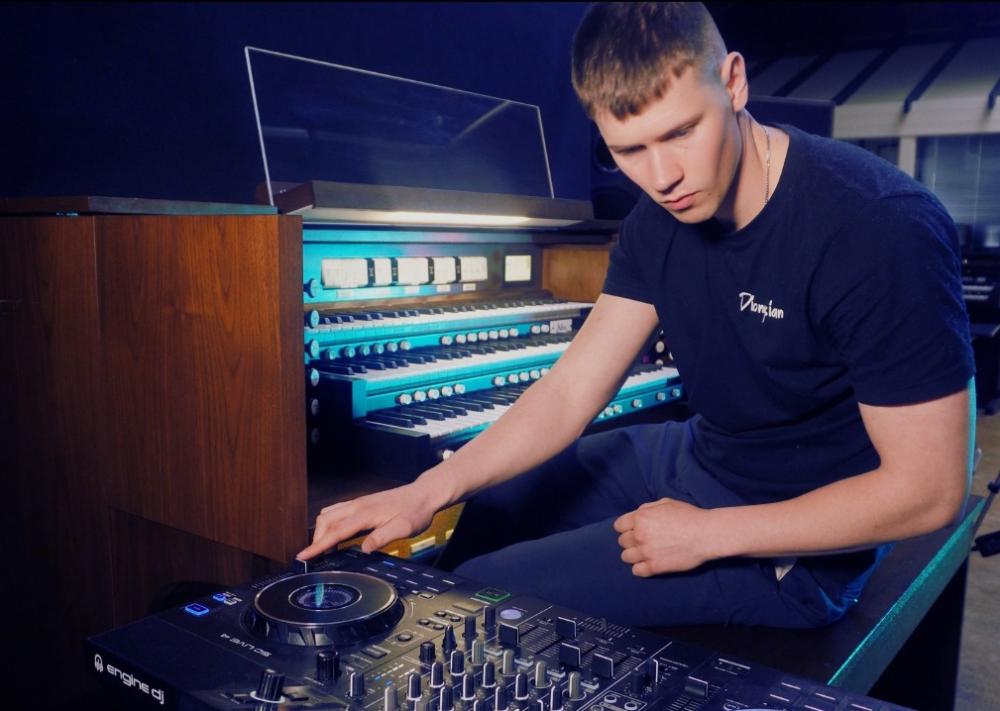
Reductio
Nowhere is the trick pulled off more thrillingly than on Boëllmann's Toccata from the Suite Gothique. It opens as the traditional organ we all recognise, stately and severe—before everything yields way to what can only be described as a rave in the nave. Then, halfway through, the organ blasts forth again with that famous theme at full throttle, as if reasserting who is really in charge. It is a masterstroke of structure as much as sound.
Gigout's Toccata, from his Ten Pieces, gets the same treatment—and the composition based on the fourth movement of Brahms's Symphony No. 4 had me picturing a magnificent cinematic epic, all sweeping scale and widescreen drama. And then there's Veni Emmanuel: bewildering only in the best sense, the disco beat builds and builds before giving way to the familiar "O come, O come, Emmanuel" melody, carefully interwoven with genuinely wonderful textures. It is the moment the album's whole argument crystallises — reverence and rave, perfectly reconciled.
Gothic, but make it a rave.
Make no mistake — this is gothic to its foundations. The Abbey's stone reverberation does half the work, wrapping every chiming bell and sub-bass throb in that unmistakable ecclesiastical echo. You can picture these vast, sacred spaces rocking—quite literally—to a beat that genuinely includes them, and you will contemplate the organ and church music in a new way. It is experimental, unapologetic, and occasionally so odd it borders on parody — except it never quite tips over, because Walters plays it entirely straight.
Reassuringly, he has not abandoned the tradition he is busy detonating. He still plays the traditional repertoire and does so beautifully. The excerpt from Mozart's Requiem included here is chilling and thrilling in equal measure and utterly authentic to the terror and grandeur the original was built to conjure. That fidelity is what separates Dionysian from a novelty record: Walters clearly reveres the source material even as he casts convention into the cauldron.
Some will call it rebellion. It is certainly boundary-pushing. But perhaps it is simply time we let ourselves be challenged and stepped outside our comfort zones for forty-odd minutes.
Verdict
I love its difference. I love its challenging nature. I love the disco beat. And for a critic over 60, I thoroughly enjoyed every irreverent, reverberating minute of it. Try it—and dare yourself to like it.
Also by Andrew Palmer...
Classical Music: Vienna Philharmonic Sommernachtskonzert Schönbrunn 2026Classical Music: Contemporary Uzbek Music for Clarinet and PianoThe Milner York: Grandeur At The End Of The PlatformA Stunning Conclusion: Romeo and Juliet Brings The Curtain Down On Ripon Theatre Festival 2026Classical Music: Martha Argerich: A- Z Schumann - TchaikovskyThe shortened address for this article is: newspub.uk/320ch
Search Results