


search
date/time

Sat, 10:00PM
overcast clouds
19.3°C
W 12mph
overcast clouds
19.3°C
W 12mph
 | Sunrise | 3:34AM |
| Sunset | 8:46PM |  |

Andrew Palmer
Group Editor
P.ublished 4th July 2026
arts
Review
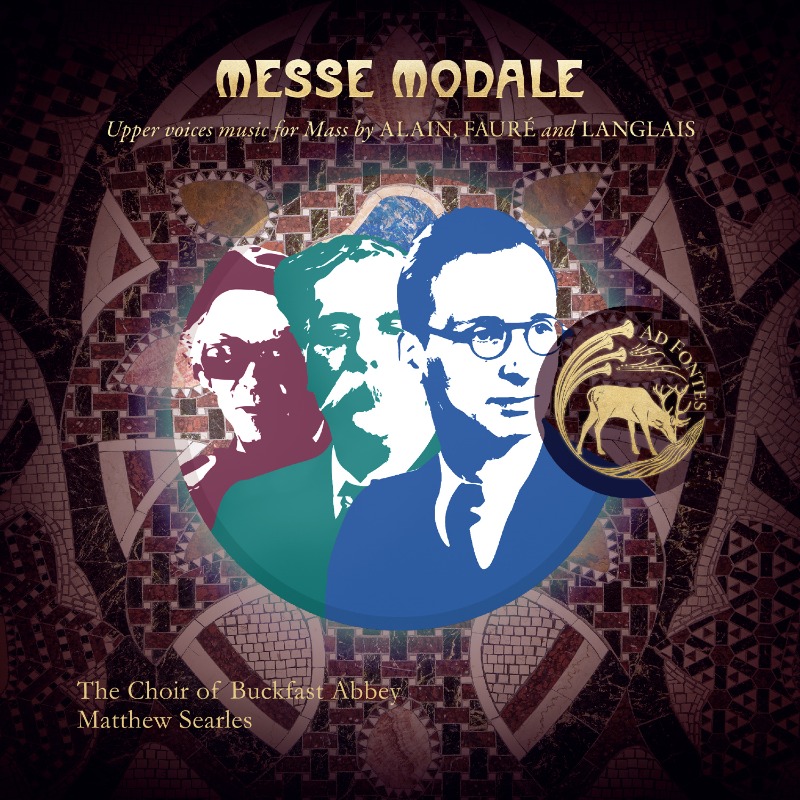
Classical Music: Messe Modale: Upper Voices Music For Mass
Upper Voices in Radiant Acoustic
Jehan Alain Choral cistercien; Messe modale en septuor, AWV110; O quam suavis est, AWV39; Anonymous Alleluia - Ave Maria (plainchant); Beata viscera (plainchant); Gaudeamus (plainchant); David Davies Gloria; Gabriel Fauré Messe basse; Jean Langlais Missa in simplicitate; Trois Prières; André Messager O salutaris Hostia; Daniel Roth Aim Karin fantasie for flute and organ
The Choir of Buckfast Abbey Matthew Searles director
Charles Maxtone-Smith organ, Lloyd Hampton flute, Maia Carter-Oakley soprano
Ad Fontes AF018
Release Date: July 10th LSOLive/ Ad Fontes
https://www.adfontes.org.uk/
The opening introit, Gaudeamus, sets the tone beautifully and leads naturally into the Fauré, where Maxtone-Smith's organ accompaniment is a constant delight – delicately registered, full of colour, and never once intrusive, not even in the Gloria, where a heavier hand might easily have swamped the upper voices. Between Fauré's Benedictus and Agnus Dei comes a lovely interpolation: André Messager's O salutaris, its melodic lines unfolding with real fluency and illuminated further by Searles' own booklet notes, which offer genuinely useful context throughout.
The Gregorian interludes are handled with the same care. Alain's Messe modale en septuor is accompanied by flute and strings—an unusual and effective touch, with Hampton's flute emerging as an extra voice within the Agnus Dei, and the engineers have caught a genuinely well-judged balance between all the musicians throughout. Alain's short Choral Cistercien pour une Elevation and his O Quam Suavis Est bridge the gap to his Trois Prières, and here soprano Maia Carter-Oakley is the standout soloist: her account of the Tantum Ergo is exquisite, and the dialogue between voice and organ is handled with real sensitivity on both sides.
The disc closes with Langlais' Missa in simplicitate, followed by Daniel Roth's Ain Karim — a fantasy for flute and organ, its title taken from the village near Jerusalem where, tradition holds, Elizabeth first heard the words of the Magnificat. It makes for an atmospheric close: rhapsodic organ writing gives way to a hauntingly exposed solo flute before the organ re-enters in dialogue. Roth, still active at St Sulpice in Paris, clearly understands the flute's expressive and dramatic possibilities, and Maxtone-Smith draws thoroughly idiomatic French sonorities from the Ruffatti organ throughout. Where the choir sings unaccompanied, the discipline is evident — the ensemble and intonation are both secure.
If there is a caveat, it is one of variety rather than execution: this is a disc built on simplicity, and simplicity, however skilfully achieved, can begin to feel a touch samey across a full sitting. But the individual performances are never less than accomplished, and there is much here worth returning to.
Also by Andrew Palmer...
Classic Music: Saxophobia - Celebrating the Sax Craze of the 1920sSir Stephen Hough To Lead Leeds Piano Competition Into Radical New EraCurtain Up: Yorkshire Throws Open The Doors On Its Own FringeCurtain Rises On Milestone Fifth Ripon Theatre Festival With Two Powerful New PlaysBusiness And Housing Leaders Give Cautious Welcome To Burnham's "Innovation Nation" Vision