


search
date/time

Mon, 12:00AM
light rain
7.1°C
SSE 7mph
light rain
7.1°C
SSE 7mph
 | Sunrise | 7:44AM |
| Sunset | 4:57PM |  |

Andrew Palmer
Group Editor
P.ublished 7th February 2026
arts
Review
Classical Music: 17(67)
Cuban-American Cellist Tommy Mesa Bridges Three Centuries In A Captivating Recital
Saint-Saëns TheSwan; Jocelyn Morlock Halcyon; Jules Massenet Méditation from Thaïs; Ernesto Lecuona (arr. Tommy Mesa); La Comparsa; Florence Price (arr. Tommy Mesa) Deserted Garden; Francisco Braga Anoitecendo; Andrea Casarrubios Mensajesdel Agua; Marlos Nobre Poema III; Jennifer Higdon Nocturne; Ernest Bloch From Jewish Life: Prayer; Kinan Azmeh A Sad Morning Every Morning
Dr Tommy Mesa cello Yoon Lee Piano
Azica Records ACD-71390
https://azica.com/
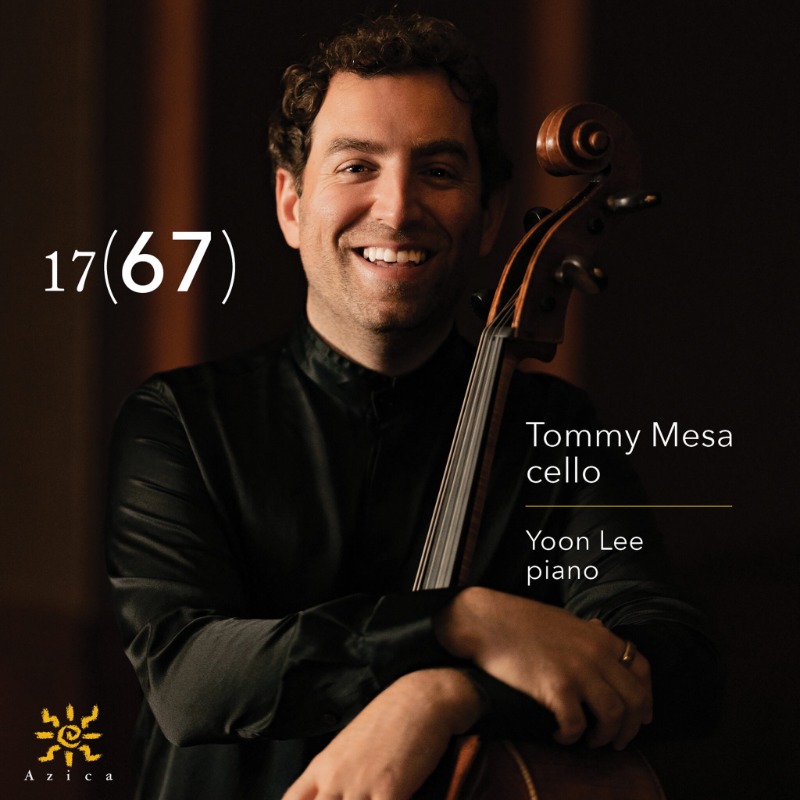
Mesa's second solo album, 17(67), takes its title from dual sources: 1767, the birth year of the Nicolò Gagliano cello he plays throughout, and 67, a popular contemporary slang term.
The juxtaposition embodies Mesa's central artistic vision—the meeting of tradition and innovation. "This is the artistic space I cherish most: where historical craftsmanship and modern creativity coexist," he explains. "17(67) pays tribute to the journeys of composers who came before us while championing the voices of my peers, whose music helps shape the classical world of today and tomorrow."
Mesa opens with Saint-Saëns's ever-popular The Swan from Carnival of the Animals, immediately capturing the listener with his resonant and expressive tone.
A vein of melancholy runs through the album as Mesa communicates the breadth of his instrument's expressive range. His phrasing and articulation are beautifully shaped; the cello sings to the listener, while Yoon Lee's sympathetic accompaniment never intrudes, instead enhancing each piece as the duo intertwine in captivating dialogue. The warmth shines through repertoire that tugs at the heartstrings.
Massenet's Méditation offers lyrical landmarks from the Romantic canon, while Mesa brings considerable depth to Florence Price's Deserted Garden and Ernest Bloch's Prayer, both imbued with deeply rooted spiritual and song-like sensibilities.
On a disc dedicated to the cello, the textural colours possess a glow that evokes shifting moods and atmospheres. Works from the early 20th century, such as Francisco Braga's Anoitecendo, capture atmospheric impressionism shaped by Brazilian colours and forms. Contemporary voices provide compelling counterbalance, including Grammy-nominated composer Andrea Casarrubios's fluid Mensajes del Agua and Jocelyn Morlock's evocative Halcyon.
One particular delight is Marlos Nobre's Poema III, where Mesa brings out the contrasting textures and embraces the rhythmic pulse with conviction.
Mesa's own arrangements of Cuban composer Ernesto Lecuona's La Comparsa and Florence Price's Deserted Garden illuminate their melodic beauty through a distinctly personal lens. The album closes with Kinan Azmeh's A Sad Morning Every Morning—a lament shaped by Middle Eastern inflection and improvisatory expression—offering a contemporary voice that resonates with urgency and humanity.
Mesa extends special thanks to Roger Dubois, founder of Canimex Inc., for generously loaning both the cello, crafted by Nicolò Gagliano in 1767, and the bow by André Richaume (circa 1960).