


search
date/time

Mon, 12:00AM
light rain
7.1°C
SSE 7mph
light rain
7.1°C
SSE 7mph
 | Sunrise | 7:44AM |
| Sunset | 4:57PM |  |

Andrew Palmer
Group Editor
P.ublished 7th February 2026
arts
Review
Classical Music: ContraDANCE – MZ Duo
The saxophone and accordion forge a distinctive musical partnership.
Sweeney: The Mirrie Dancers; Granados: Danzas españolas, Op. 37 Nos. 1-12;Ravel: Le Tombeau de Couperin; Paxton: Water Butt: lovers, snorkel; Bartók: Dance Suite, BB 86, Sz. 77.
David Zucchi Saxophone Iñigo Mikeleiz-Berrade accordian
Delphian DCD34361
https://www.delphianrecords.com/
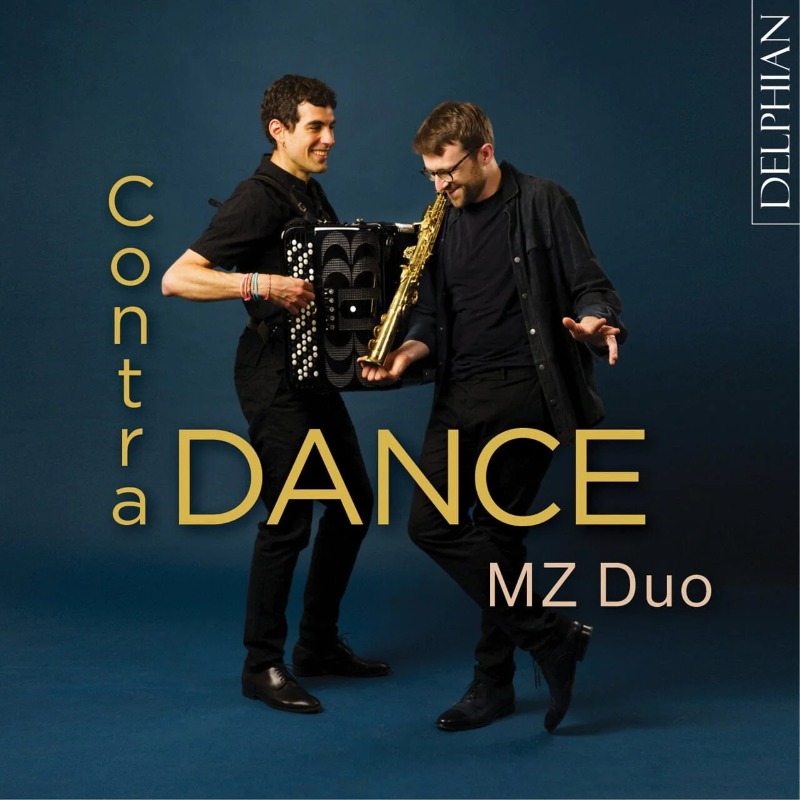
The soprano saxophone and accordion might appear an improbable combination, yet the performers demonstrate throughout that these instruments share more common ground than one might anticipate. Both excel at sustained melodic lines, command considerable dynamic range, and possess the capacity for rapid articulation. What proves particularly impressive is how Zucchi and Mikeleiz-Berrade exploit these shared characteristics while celebrating their timbral distinctions.
Their programme, rooted in rhythm and movement, juxtaposes new commissions with imaginative transcriptions. Aileen Sweeney's The Mirrie Dancers, inspired by the Shetland aurora borealis provides an atmospheric start to the disc, and Alex Paxton's characteristically quirky and arresting Water Butt: Lovers, Snorkel, frame the duo's own arrangements of Granados's Danzas españolas, Ravel's Le tombeau de Couperin, and Bartók's Dance Suite.
In the Granados, the duo's sensitivity to texture and colour first becomes fully apparent. In Andaluza, the accordion's reedy lower register provides an atmospheric foundation, whereas the saxophone traces the melodic line with subtle inflections that suggest flamenco's ornamental vocabulary. The interplay between the instruments is expertly judged; each voice maintains its integrity while contributing to a persuasive whole. The rhythmic pulse that underpins these dances never falters, driving the music forward with captivating momentum.
Bartók's Dance Suite receives a particularly thrilling performance. Originally conceived for an orchestra, the work's folk-inspired vitality and kaleidoscopic instrumental colours might seem to resist reduction. Yet Zucchi and Mikeleiz-Berrade's arrangement proves remarkably effective; the accordion's bellows articulation lends a percussive bite to rhythmic passages, while the saxophone navigates the work's demanding melodic contours with impressive technical command. The combination generates an almost electrifying energy, the performers relishing the music's virtuosic demands.
Ravel's Le Tombeau de Couperin translates equally successfully to this medium. The duo's approach emphasises the work's neoclassical elegance and structural clarity, with the accordion's registration changes subtly evoking harpsichord timbres in the opening prelude. The Forlane's lilting rhythm emerges with particular grace, whilst the concluding Rigaudon sparkles with wit.