


search
date/time

Sat, 7:00AM
overcast clouds
12.3°C
W 12mph
overcast clouds
12.3°C
W 12mph
 | Sunrise | 5:20AM |
| Sunset | 6:50PM |  |

Andrew Palmer
Group Editor
P.ublished 5th September 2026
arts
Review
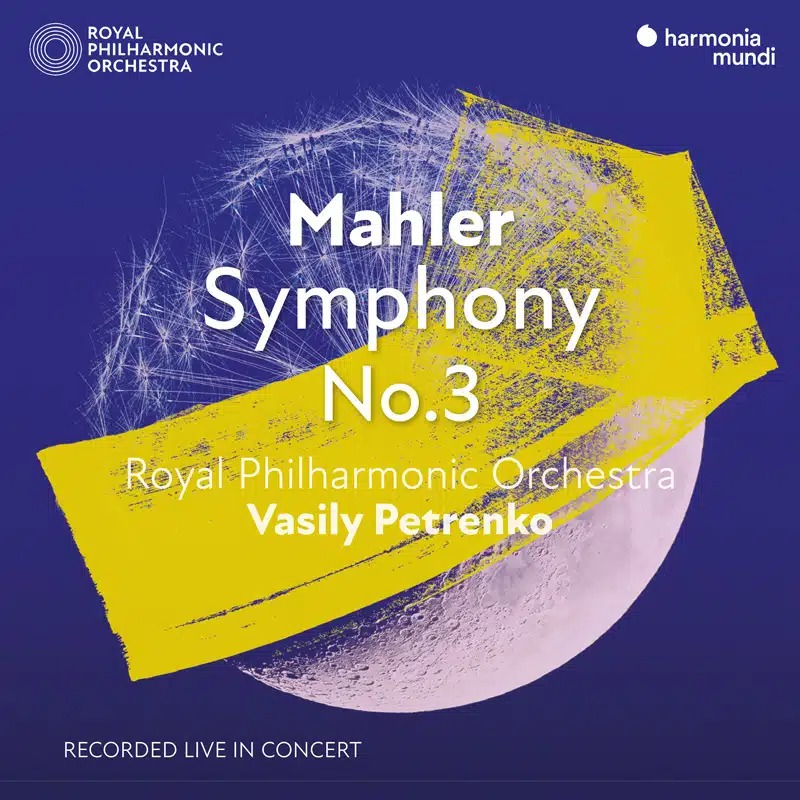
Classical Music: Mahler's Symphony No. 3 in D minor
Petrenko unlocks Mahler's cosmic Third
Hanna Hipp (mezzo), Royal Philharmonic Orchestra, Philharmonia Chorus, Tiffin Boys' Choir
Vasily Petrenko
Harmonia Mundi: HMM90542122
https://www.harmoniamundi.com/en/
If there is a reservation, it concerns mezzo-soprano Hanna Hipp, whose account of the "O Mensch!" setting in the fourth movement left me wanting more: a touch more interpretative daring, a wider range of dynamics and vibrato. It is a small niggle in a performance otherwise so richly stocked with incident. The Tiffin Boys' Choir, joined by the Philharmonia Chorus for the bell-song fifth movement, bring exactly the bright, unaffected energy that music demands, and the woodwind and brass are on top form throughout.
The final movement, that long, unhurried Adagio which Mahler asks to be played "felt, but without exaggeration", is sublime here, its closing crescendo one of the most satisfying I have heard on disc. This is a recording I will return to again and again.
A live recording made in the Royal Albert Hall carries obvious risks, not least an audience of some three thousand souls trying to stay silent for the best part of an hour and forty minutes, but this is a performance that rides them and emerges magnificent. Everything about it pleases, even allowing for close miking that occasionally makes its presence felt; Harmonia Mundi's team have captured a performance with real energy rather than merely a well-behaved studio facsimile.
At one hour and thirty-eight minutes, there is a great deal here to savour, and the audience, audibly, savoured it. Despite my small niggles, this is a recording I thoroughly enjoyed, and one I suspect every Mahlerian will want on their shelf. I certainly intend to keep it on mine.
Also by Andrew Palmer...
Brighton '84, A Devastating Hour In Room 102Classical Music: Beethoven String Quartets Vol 3Classical Music: Janáček The Excursions Of Mr BroučekClassical Music: Elena Ruehr: Violin Concerto No. 1Forty Years On, Mark Thomas Still Hasn't Got A PensionThe shortened address for this article is: newspub.uk/320tt
Search Results